Published
Type
SPEAKING
The New Raw Materials for a Reimagined Supply Chain
The New Raw Materials for a Reimagined Supply Chain
SPEAKING / HERE|AFTER / JUNE 2024
What has to change around an innovation for a new material to actually make it into the world?
At the inaugural Here|After in Los Angeles, I joined leaders from Patagonia, Nature Coatings and ISKO for a panel on how emerging raw materials are reshaping the fashion supply chain.
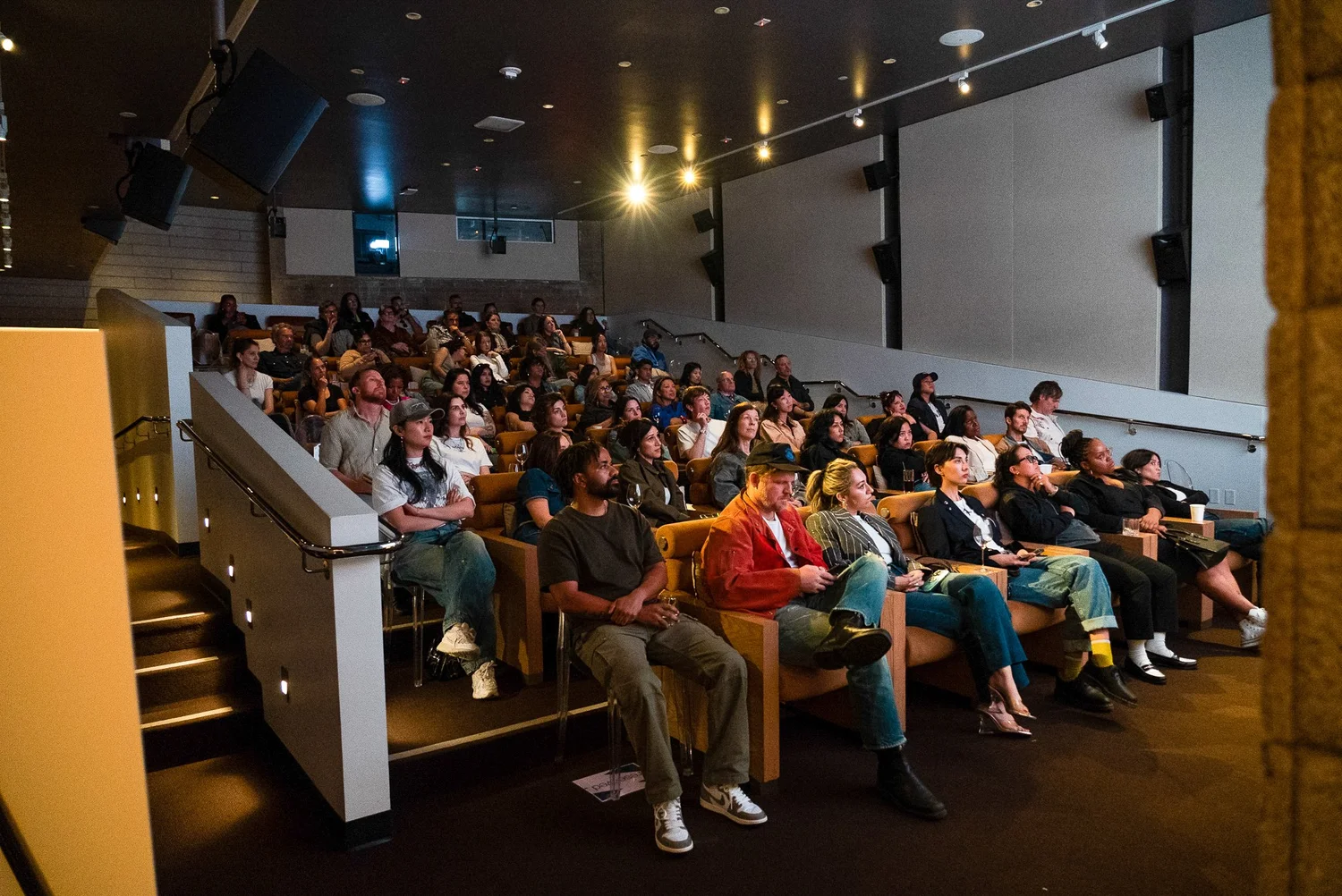
Hosted at NeueHouse Hollywood and moderated by Kate Nishimura of Sourcing Journal, the conversation brought together perspectives from brands, material innovators and textile manufacturers to look beyond the breakthrough itself and into the realities of adoption.
The event drew a sold-out audience of more than 100 people from across the Los Angeles fashion and denim community, including teams from True Religion, Good American, Veronica Beard, Tom Ford, Paige, Guess?, American Rag Cie and PacSun.
01 / BEYOND THE BREAKTHROUGH
A better material is only the beginning.
Much of the conversation around innovation focuses on whether a new technology works.
But the harder question often comes next.
Can it move through existing manufacturing systems? Can designers work with it? Can it meet performance and cost requirements? Are brands willing to commit before every uncertainty has disappeared?
Working in emerging materials taught me that these questions are not secondary to innovation. They are part of the innovation itself.
02 / THE SYSTEM AROUND THE MATERIAL
Materials move through a web of designers, mills, manufacturers, brands, commercial teams and consumers before they ever become a finished product.
That means adoption cannot be solved by any one actor in isolation.
An innovator may create a new material, but manufacturers have to learn how to process it. Brands have to find the right applications. Commercial teams have to make the economics work. Designers have to see possibility in something unfamiliar.
A new material is only the beginning. The real question is whether the system around it is ready to carry it.
03 / BUILDING SHARED LANGUAGE
One reason conversations like Here|After matter is that different parts of an industry rarely experience the same problem in the same way.
A scientist may see a performance challenge.
A mill may see a production constraint.
A brand may see commercial risk.
A designer may see a creative opportunity.
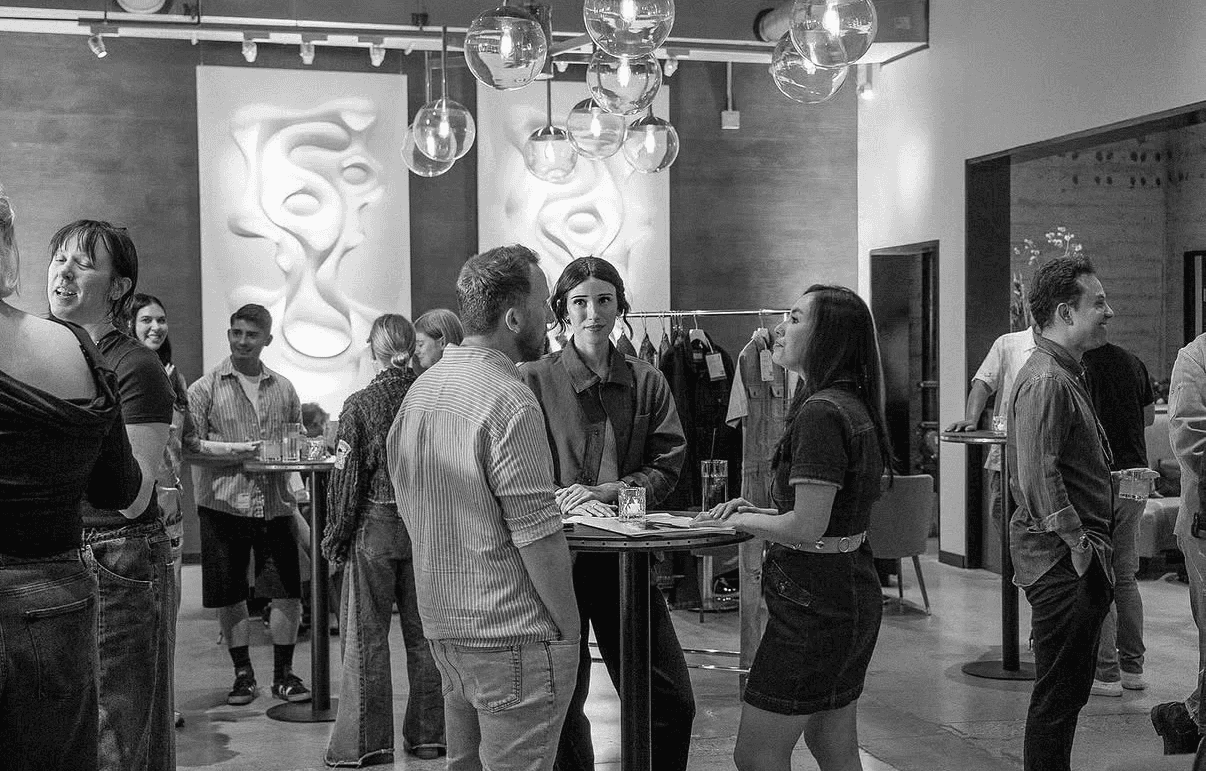
Bringing those perspectives into the same room creates the possibility of something different: a shared understanding of what needs to change for an innovation to move forward.
Three takeaways:
01 / MATERIALS
Technical possibility is the starting point.
A new material has to work, but performance alone does not guarantee adoption.
02 / INFRASTRUCTURE
Existing systems determine what can scale.
Manufacturing capability, economics, sourcing structures and established processes all shape whether something new can move beyond sampling.
03 / COLLABORATION
Adoption is a collective process.
Brands, innovators and supply-chain partners need to learn together if emerging technologies are going to become normal rather than exceptional.
LOCATION
NeueHouse Hollywood
MODERATED BY
Kate Nishimura · Sourcing Journal
WITH
Mark Little · Patagonia
Jane Palmer · Nature Coatings
Keith O’Brien · ISKO
Nava Esmailizadeh · Ambercycle
Innovation moves when the system around it begins to move too.

SPEAKING / HERE|AFTER / JUNE 2024
What has to change around an innovation for a new material to actually make it into the world?
At the inaugural Here|After in Los Angeles, I joined leaders from Patagonia, Nature Coatings and ISKO for a panel on how emerging raw materials are reshaping the fashion supply chain.
Hosted at NeueHouse Hollywood and moderated by Kate Nishimura of Sourcing Journal, the conversation brought together perspectives from brands, material innovators and textile manufacturers to look beyond the breakthrough itself and into the realities of adoption.
The event drew a sold-out audience of more than 100 people from across the Los Angeles fashion and denim community, including teams from True Religion, Good American, Veronica Beard, Tom Ford, Paige, Guess?, American Rag Cie and PacSun.
01 / BEYOND THE BREAKTHROUGH
A better material is only the beginning.
Much of the conversation around innovation focuses on whether a new technology works.
But the harder question often comes next.
Can it move through existing manufacturing systems? Can designers work with it? Can it meet performance and cost requirements? Are brands willing to commit before every uncertainty has disappeared?
Working in emerging materials taught me that these questions are not secondary to innovation. They are part of the innovation itself.
02 / THE SYSTEM AROUND THE MATERIAL
Materials move through a web of designers, mills, manufacturers, brands, commercial teams and consumers before they ever become a finished product.
That means adoption cannot be solved by any one actor in isolation.
An innovator may create a new material, but manufacturers have to learn how to process it. Brands have to find the right applications. Commercial teams have to make the economics work. Designers have to see possibility in something unfamiliar.
A new material is only the beginning. The real question is whether the system around it is ready to carry it.
03 / BUILDING SHARED LANGUAGE
One reason conversations like Here|After matter is that different parts of an industry rarely experience the same problem in the same way.
A scientist may see a performance challenge.
A mill may see a production constraint.
A brand may see commercial risk.
A designer may see a creative opportunity.
Bringing those perspectives into the same room creates the possibility of something different: a shared understanding of what needs to change for an innovation to move forward.
Three takeaways:
01 / MATERIALS
Technical possibility is the starting point.
A new material has to work, but performance alone does not guarantee adoption.
02 / INFRASTRUCTURE
Existing systems determine what can scale.
Manufacturing capability, economics, sourcing structures and established processes all shape whether something new can move beyond sampling.
03 / COLLABORATION
Adoption is a collective process.
Brands, innovators and supply-chain partners need to learn together if emerging technologies are going to become normal rather than exceptional.
LOCATION
NeueHouse Hollywood
MODERATED BY
Kate Nishimura · Sourcing Journal
WITH
Mark Little · Patagonia
Jane Palmer · Nature Coatings
Keith O’Brien · ISKO
Nava Esmailizadeh · Ambercycle
Innovation moves when the system around it begins to move too.